
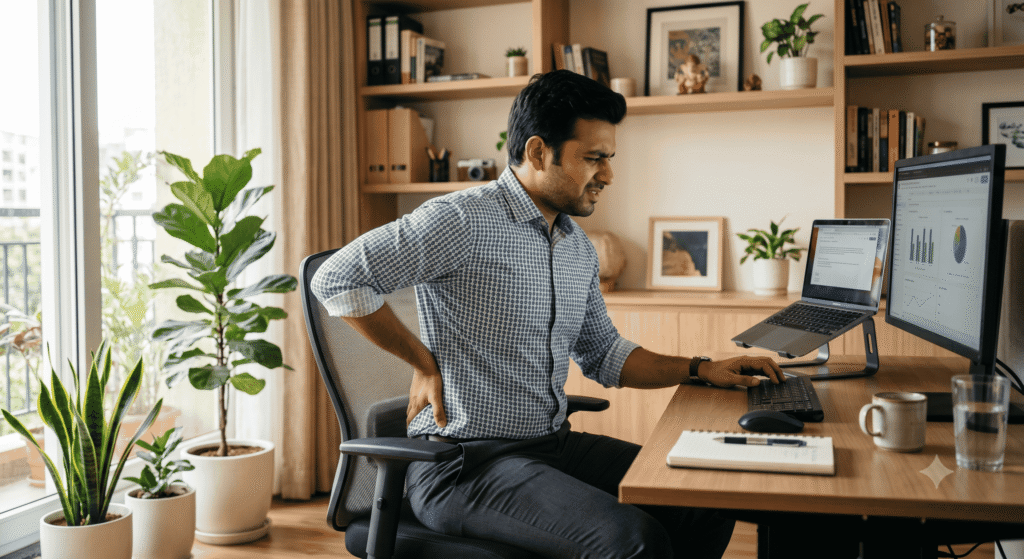
A few years ago, if someone had told me that a simple bend could lead to months of back pain, I probably wouldn’t have believed them. Like many professionals, I spent most of my day sitting and rarely thought much about how my lifestyle was affecting my body.
Then one day, I experienced a slipped disc. Like many people, I assumed it was caused by one bad movement or a moment of carelessness. But the more I learned, the more I realized that the answer was much bigger than that.
For those unfamiliar with the term, a slipped disc occurs when the soft gel-like material inside one of the discs in the spine pushes outward and irritates nearby nerves. This can cause severe back pain and, in some cases, pain that travels into the hips, buttocks, or legs.
A slipped disc can certainly happen to a healthy person who lifts something extremely heavy with poor technique. However, that is not the story for many modern professionals. In many cases, the problem has been developing quietly for years before symptoms finally appear.
Think about a typical day for many of us. Breakfast at the table, commuting to work, sitting through meetings, working in front of a computer, driving back home, having dinner, and then spending the evening on the sofa. By the end of the day, many people have spent most of their waking hours sitting.
The strange thing is that this feels completely normal because almost everyone around us lives the same way. Yet our daily lives involve far less movement than they did even a few decades ago.
Over time, prolonged sitting can contribute to tighter hip muscles, weaker glutes, weaker core muscles, weight gain, and reduced overall fitness. These changes happen gradually, so most people never notice them happening.
The body often sends small warning signs long before a major problem develops. Occasional stiffness after work, discomfort while bending, or back pain that comes and goes may seem harmless. Because the symptoms disappear, it is easy to assume that the problem has disappeared too.
What many people don’t realize is that the spine does not work alone. It relies on surrounding muscles to help support movement and distribute load efficiently. When those muscles become weaker or less active, everyday activities can place more stress on the structures of the back.
This helps explain why some people experience severe pain while doing something surprisingly ordinary. Picking up a bag, lifting a child, reaching into a cupboard, or bending down to tie a shoelace may become the moment when symptoms finally appear.
The movement itself is often not the real problem. It may simply be the event that exposes years of accumulated stress and reduced resilience within the body.
One of the biggest lessons I learned is that a slipped disc is often not the beginning of the story. More often, it is the point at which the body can no longer compensate for habits and patterns that have been developing for years.
The good news is that many of the factors that contribute to back problems are within our control. Regular movement, strength training, maintaining a healthy weight, and reducing long uninterrupted periods of sitting can significantly improve the body’s ability to tolerate stress.
Modern life has made many things easier and more convenient. The challenge is that it has also removed a surprising amount of movement from our daily routines. Sometimes the solution is not finding the perfect exercise program, but simply bringing more movement back into everyday life.